

What TV producers need to know before they'll say yes.
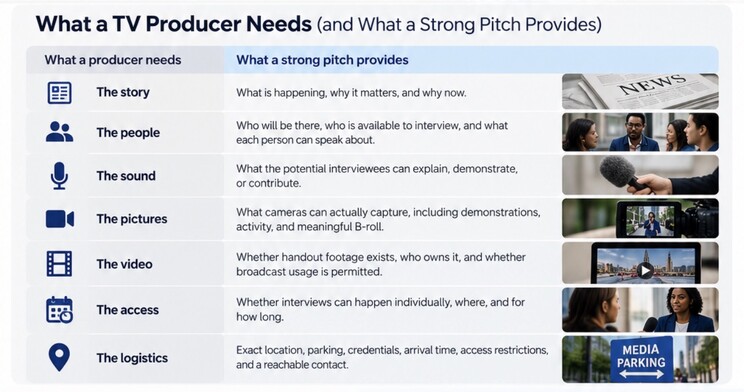
A television producer isn't simply deciding whether a story is interesting. They're figuring out whether they can actually put it on television.
The best pitches answer that question before the producer has to ask. That's the difference between a press release and a production-ready pitch. Do the producer's homework before they have to.
What happens when the crew arrives?
A pitch can sound terrific until the photographer gets there and discovers the event is just six people standing behind a podium, no one is available for a separate interview, and the promised video can't be used. That's a wasted assignment.
A producer needs to know what the crew will actually encounter, not simply what the event organizer hopes will happen.
Are there meaningful visuals? Can interviews happen away from the podium? Is there enough time to capture everything? Will the people promised in the pitch actually be available? These details can determine whether a story gets covered at all.
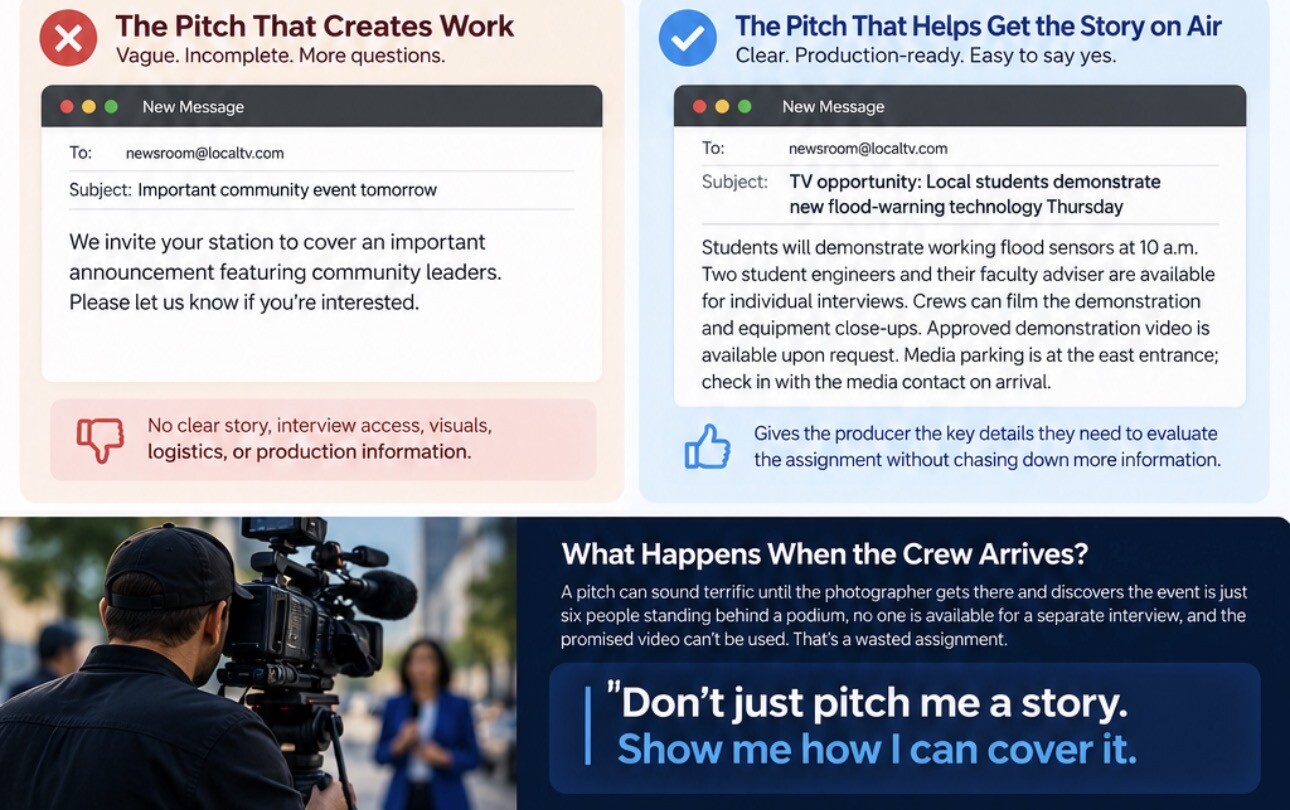
The second pitch gives a producer enough information to begin evaluating the assignment without chasing down seven unanswered questions. It tells them what the story is, what they'll be able to shoot, who they can interview, and how their crew can get the job done.
That doesn't guarantee coverage. But it makes the decision easier.
Give journalists access, not a script
There's an important distinction between preparing an interview opportunity and trying to control the interview.
A good pitch identifies who is available, what subjects they can discuss, what firsthand experience they bring, and whether they'll have time for individual interviews. It should never promise what an interviewee will say or assume the journalist will follow a predetermined script.
Journalists still ask their own questions, evaluate the answers, and make their own editorial decisions.
Make the assignment easier to say yes to
For public relations professionals, organizations, and experts hoping to earn media coverage, the lesson is straightforward. Think beyond the announcement. Think about the crew, the deadline, the interviews, the video, the access, and the logistics.
Because when a producer opens your email, they're already trying to picture the finished story. Don't just pitch me a story. Show me how I can cover it.
At Coordius , we believe better connections between journalists, creators, and credible experts begin with understanding what each side needs to do its job well.
Learn more at Coordius.com